
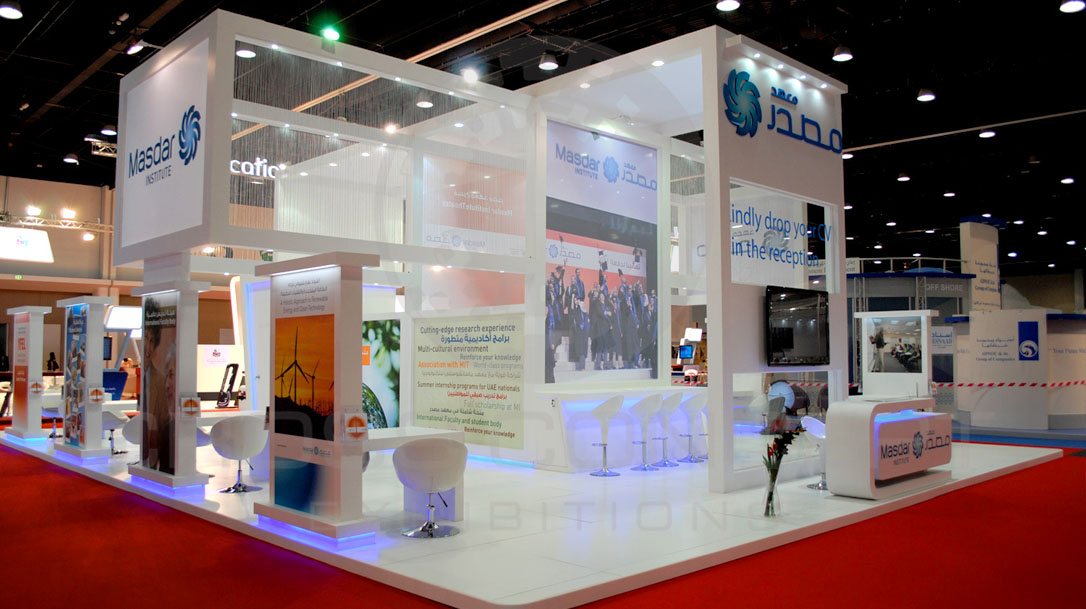
A second level doubles the space you can use on the same footprint, which is why double-deck stands are popular for hosting meetings at busy shows. Because people stand on it, organisers and venues check it far more closely than a single-level stand.
Why a double-deck is treated differently
A single-level stand is mostly walls and graphics. An upper deck is a structure carrying people, furniture and catering above other visitors, so the venue needs to see that it has been engineered, built to the drawings and inspected on site before anyone goes up.
What goes into the approval package
- Structural drawings: plans, sections and connection details for the deck, columns and staircase.
- Load calculations: how much the deck is designed to carry per square metre, checked and signed by a structural engineer.
- Floor loading: how the column loads spread onto the hall floor, which has its own limits.
- Stairs and balustrades: step sizes, handrails and barrier heights on every open edge.
- Fire and escape: exit routes from the upper level, materials and any extinguishers or detection the venue asks for.
Allow about two extra weeks for a double-deck: the drawings take longer to prepare, the organiser's engineer often comes back with comments, and some venues charge an inspection fee.
On site
Build-up for a double-deck takes longer, and the upper level usually cannot be used until the venue's inspector has signed it off. Occupancy is limited to the number the deck was designed for, which is worth knowing before you plan a launch party upstairs.
Is it worth it?
For stands where meetings, hospitality or private demos matter, often yes. A double-deck gives you quiet rooms above the noise of the show floor without paying for a larger space. For a short show or a stand that is all about walk-in footfall, the extra time and cost often go further on the ground floor.